In this two-day lesson, students will explore the agricultural practice of composting, and the role of decomposition in a garden ecosystem. The first day focuses on exploring the process of decomposition using observations of a series of compost piles at different stages of decomposition.
In this lesson, students will synthesize their learning from the unit in order to develop a planting proposal for the garden. Depending on how in-depth you want your students to go, you may choose to spend anywhere from a day to a week on this part of the unit.
Student engagement is the degree of attention, interest, curiosity, and positive emotional connections students experience while learning. It is what we build from to understand instruction.
In this eighth-grade humanities lesson, students make frittata and salad with their choice of salad dressing, and discuss the relationship between food choices and the environment with a specific focus on water use and food waste.
Is there a food that reminds you of a memory from when you were younger? Can you think of recipes or flavors that have been passed down in your family for generations?
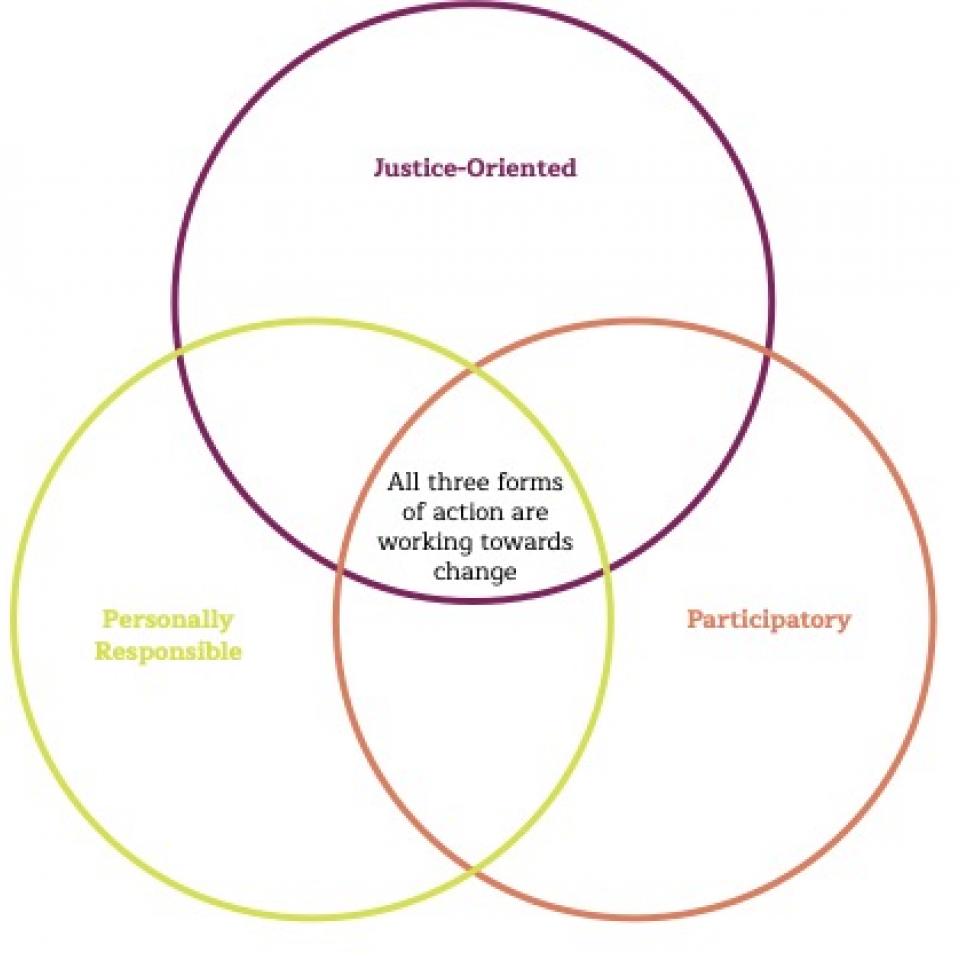
In this lesson, students learn about three different forms of action that can be taken to make positive change. They then study individuals and organizations employing each of these kinds of action on issues related to "organic."
This resource details some important ways to set up agreements in your class. Additionally, it provides suggested instructional practices that can support you in building an open, supportive, inclusive, and rigorous classroom community.
Many of us are familiar with the term “organic”. But even if we can define it, we don’t always take the time to explore what “organic” represents. In this lesson, students will explore and discuss their understanding of what “organic” is, and what it represents to them.
In this lesson, students will use a text analysis practice to reflect on what makes a text “trustworthy”. The practice prompts students to think about their experiences and identities in relationship to the text's creator, and to question the biases they may hold.