
April 24, 2026
Natural Dye 101!
Making natural dye is a fun way to connect with what's growing in your garden or community and connects us to our sense of curiosity and wonder for the natural world. As I've delved into the world of pigment I've found myself wondering what color the plants on my block might yield if I brewed them into a dye. After making sure to harvest responsibly, the world is your oyster! Plants have been used for their colorful pigments for millenia. By continuing this tradition, we can learn more about the plants around us and explore their many uses!Not every plant will make a consistent ‘colorfast’ dye but you'll earn something each time. Below are some details to help you become a proficient dyer and some recipes to get you started.
Process Overview
When making dyes there’s a standard set of steps if you want a vibrant ‘colorfast’ results. Colorfast means that the color won't fade in the sun or wash out in the machine. The first step is scouring - this includes cleaning the fabric or yarn of dirt and oil. This step allows the material to more easily uptake the dye and hold the mordant.
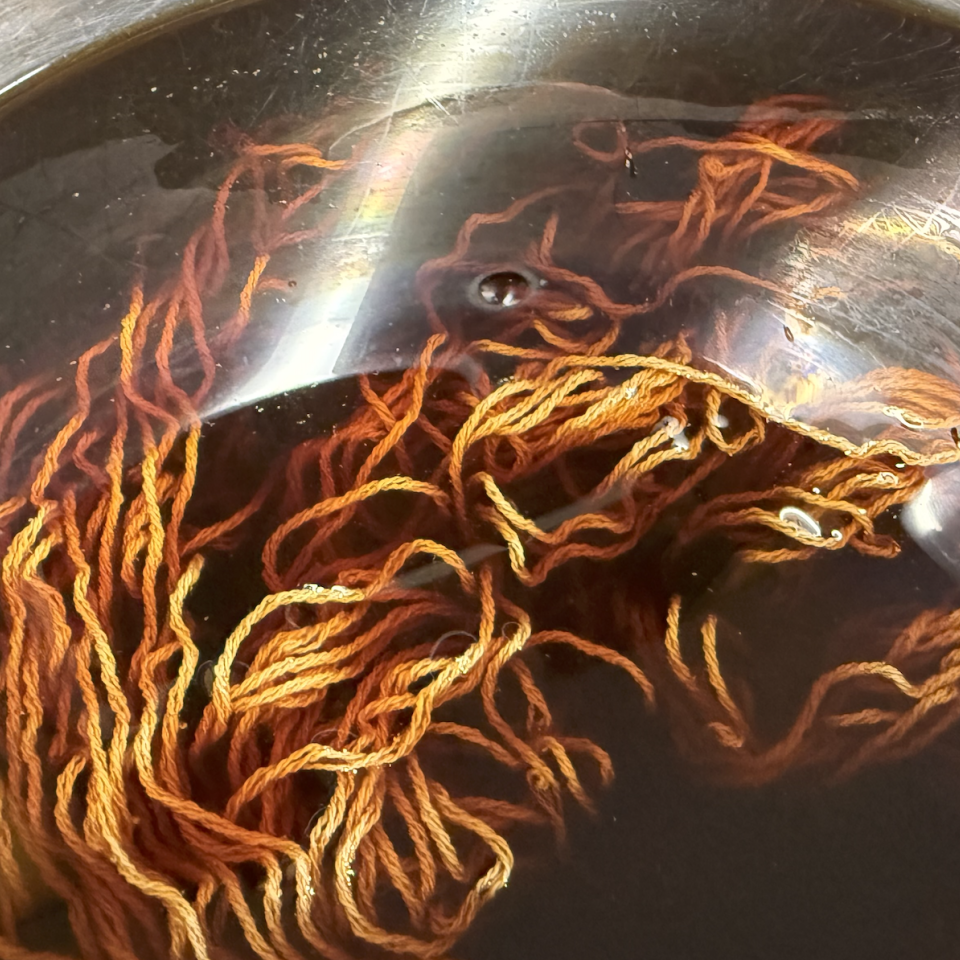
The next step is mordanting. Mordants are compounds that bond dyes to fibers- these are sometimes tannic ingredients like madder root or indigo leaves but are often metallic salts. The clean fabric is simmered in a mordant bath to prepare the fabric to hold onto the dye.
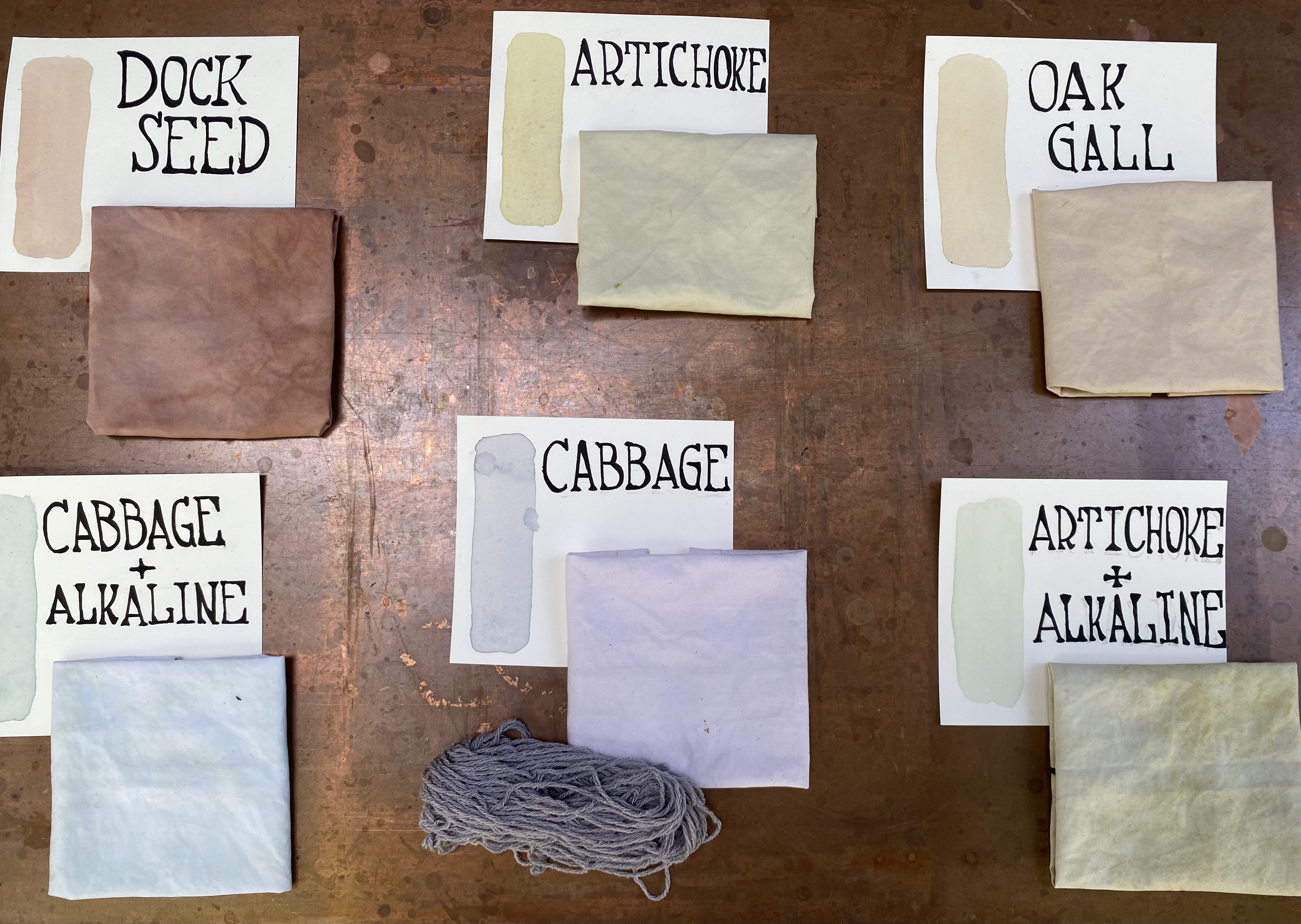
Next is the actual dye making. To create dye, you can use a prepared powdered mix from a dye shop or you can gather your own ‘dye stuffs’. Think of leaves with strong bitter tastes (like artichoke leaves) or deep rich flowers (sour grass or marigolds). Gather your ‘dye stuffs’ - a good rule of thumb is 50% of the weight of the goods you want to dye - but there's a lot of wiggle room. If you want a deep rich shade, air on the side of more dye stuffs or if you want a soft muted shade you can use less or steep it for a shorter period. You can either simmer your fabric/yarn with the dye stuffs or make the dye and then filter out the vegetable matter before dying.
Mordant
Process for cellulose fibers (plant based:cotton, linen, etc)
The best mordant for plant based fibers is aluminum acetate but this is expensive and hard to find. Oftentimes, I use Alum instead which is less expensive and can be found in the spice section of the grocery store. Fill a pot or bucket with enough hot water so fibers can move freely. Weigh your fabric, the quantity of alum should be 15% of the weight of fabric (if using aluminum acetate use 6%). Mix the alum in a separate bowl with hot water until dissolved and then mix that into your pot. In a bowl large enough for your fabric, presoak your fiber until it is fully saturated and no air pockets left- we do this so the mordant/dye can be fully absorbed. Place presoaked fabric in your mordant mix and let it soak for 2-24hrs. After which you can rise out the excess mordant and your fabric is ready to dye. Cellulose fibers can stay wet for up to 3 days in preparation for dying otherwise prepare to fully dry and store the fabric.
Process for protein fibers (silk, wool, etc)
Luckily the best mordant for animal fibers is alum- a common pantry staple that's relatively inexpensive and found at the grocery store. Measure the weight of your fiber/fabric, your alum weight will be 14% of the weight of your goods. The alum can be mixed with hot water until dissolved, and then mixed into a pot with enough room temperature water for your goods to move around freely. Presoak your fiber in a small bowl until they are saturated and then add them to your alum mordant pot. Slowly bring the pot up to a simmer (180 degrees) over a 30 minute time period. Hold your goods there for an hour, mixing things up periodically so they absorb evenly but make sure to be gentle especially if using wool. Then allow to come back to room temperature, rise with room temperature water. Protein fibers can stay wet for up to 5-7 days, if you won't be dying in that timeframe lay your good flat to dry.
Making Dye!
This part of the process is actually so much more straightforward than I had anticipated. Simply gather what you want to use as a dye- shooting for 50% of the weight of your fabric/fiber. Good first time projects would be sour grass flowers, oak galls, dyers cosmos, or marigolds. Add your dye stuffs to a pot (it's nice to have a pot dedicated to dying but it's a deal buster) and cover with room temperature water. Slowly bring to a simmer and hold it there for 1-3 hours depending on how much pigment is present in the water, then turn it off and let it come to room temperature. If you're satisfied with the color or have limited space, you can strain out the vegetable matter- otherwise I recommend letting the dye bath continue to brew overnight. You can then strain it the next morning.
Dying Your Fiber
Presoak your mordanted fiber so it's fully saturated, this applies even if you've left it wet from the mordanting process, you want to make sure it's fully saturated so the dye will absorb evenly. Place your dye pot on the stove and place your saturated goods inside. Slowly bring the pot up to a simmer over the course of 30 minutes. Watch as the fabric begins to absorb the dye, and bear in mind that some dye will wash out and that it will dry 2-3 shades lighter than its wet appearance. Hold your fiber in the bath for at least 30 minutes and up to 2 hours to ensure even absorption, and rotate the fibers every 10 minutes. If I haven't achieved the depth of color I'm hoping for by the 2 hour mark then I'll turn it off and let the fiber sit in the dye bath overnight. Once satisfied you can pace your fibers in a clean bowl and give it several rinses in water until the water runs clear.
Plants to ‘Dye’ For
- Dyers Cosmos
- Pinecones
- Onion skins
- Avocado pits
- Elderberry
- Hibiscus flowers (fresh or dried)
- Artichoke
- Dock
- Wled
- Black Walnut (Fresh in shell)
- Marigolds
- Anything with ‘Tithonia’ in it scientific name


