The Silk Road: Chinese Steamed Dumplings

0
Published June 12, 2012
Subject: English, History
Season: Spring
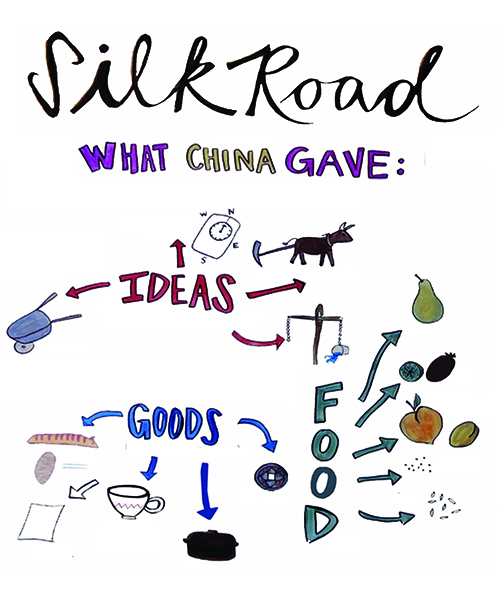
Place of Learning: Kitchen Classroom
Resource Type: Lessons
Grade Level: Grade 6
Uploaded by:
Kyle Cornforth
Program Affiliations:

In this 6th grade humanities lesson, students prepare Steamed Dumplings as they study the exchange of ideas, goods, and foods between China and other regions during the Han dynasty. This is the first of four Silk Road lessons.

Objectives

After this lesson, students will be able to:

  • Cite examples of China’s contributions to the Silk Road
  • Cite the geographic features that isolated China before the Han Dynasty
  • Explain why certain items were valuable for trade along the Silk Road
  • Recognize basic tools, terms, and techniques
Assessments

During this lesson, students will:

  • Name ideas, goods, and foods from China that were traded along the Silk Road
  • Name a geographic feature that isolated China before the Han Dynasty
  • Identify traits that translated to value: light, packable, and in limited supply
  • Identify the Wok as a tool and steaming as a cooking method
Materials

For the Chef Meeting

Ingredients for the Steamed Dumplings

  • Extra firm tofu
  • Carrots
  • Napa cabbage
  • Scallions
  • Cilantro
  • Soy sauce
  • Hoisin sauce
  • Sesame oil
  • Salt
  • Fresh ginger
  • Pepper
  • Small won ton wrappers

Tools

  • Wok
  • Bamboo steamers
  • Mixing bowl
  • Grater
  • Cutting boards
  • Vegetable peeler
  • Chefs’ knives
  • Paring knives
  • Measuring spoons
  • Measuring cups
  • Small plates
  • Small bowls
  • Teaspoons

Equipment

  • Stove
Preparation

Before You Begin

  • Collect all the tools and ingredients, and then distribute them to the tables
  • Gather supplies for the Chef Meeting
  • Create the visual aid
  • Copy the Steamed Dumplings recipe to hand out
  • Select music and set up the audio player
  • Press the tofu to remove excess moisture
Procedures

At the Chef Meeting

  1. Play music as students silently enter the classroom.
  2. Welcome students and introduce the Silk Road lesson. Tell students they are embarking on a four-lesson journey along the Silk Road.
  3. Define the Silk Road as a network of trade routes that began in China and spanned 4,000 miles to the Mediterranean and connected empires.
  4. Describe the isolation of China during the Han Dynasty due to its geography.
  5. Use the visual aid to review the goods, ideas and foods that China traded along the Silk Road. Emphasize the value of silk by explaining that the Chinese were the only people who knew how to make it. It was valuable for trading because it was rare. It was ideal for trading because it was light, packable and didn’t break.
  6. Explain how food can be an indicator of cultural exchange. As new plants and farming techniques were shared along the Silk Road, the foods that people ate changed.
  7. Introduce the Steamed Dumplings recipe. Tell students that steaming was a cooking technique originating in China and demonstrate how to use the wok and bamboo steamers.
  8. Ask students to wash their hands and join their table group.

At the Table

  1. Meet with the table groups to review the recipe and assign jobs. Demonstrate how each ingredient will be prepared and how to form the dumplings for steaming.
  2. Prepare the recipe.
  3. Set the table; eat; clean up.

At the Closing Circle

Name one item that China contributed to trade along the Silk Road.

Vocabulary

 Wok

Connections to Standards

California State, History–Social Science, Grade 6
6.6.2 Explain the geographic features of China that made governance and the spread of ideas and goods difficult and served to isolate the country from the rest of the world.

6.6.7 Cite the significance of the trans-Eurasian “silk roads” in the period of the Han Dynasty and Roman Empire and their locations.

Common Core, English Language Arts and Literacy, Grade 6
SL.6.1 Engage effectively in a range of collaborative discussions (one-on-one, in groups, and teacher-led) with diverse partners on grade 6 topics, texts, and issues, building on others’ ideas and expressing their own clearly.

Edible Schoolyard In the Kitchen, Tools, Grade 6
6.1 Identify and name basic tools and equipment.

Edible Schoolyard In the Kitchen, Terms and Techniques, Grade 6
6.1 Use basic cooking terms and techniques.

Contributors

 All lessons at the Edible Schoolyard Berkeley are a collaboration between the teachers and staff of the Edible Schoolyard and Martin Luther King Jr. Middle School.

Other Content From Kyle Cornforth

Students work in the ESY kitchen to bake a delicious treat of pear and apple crisp. Students recognize that this is their last garden after school class. They reflect on their time and share out a highlight from their time here. They also share plans for the Thanksgiving...

Area: Garden Classroom
Type: Lessons
Rating:
0

Students have a light snack. Students will work together to plant four beds of green cabbage. Students draw on their knowledge on how to amend soil with compost. They then transplant, water and cover beds with hoops and nettings.

Area: Garden Classroom
Type: Lessons
Rating:
0

Students work together to make roasted potatoes in the wood fire oven. While potatoes are cooking, students enjoy each other’s company and have time to play with the chickens.

Area: Garden Classroom
Type: Lessons
Rating:
0