Students work in the ESY kitchen to bake a delicious treat of pear and apple crisp. Students recognize that this is their last garden after school class. They reflect on their time and share out a highlight from their time here. They also share plans for the Thanksgiving...
Frittata
In this 6th grade humanities lesson, students prepare frittata while they review the kitchen systems and skills they have learned during their fall rotation.
After this lesson, students will be able to:
- Recognize and name basic tools and equipment
- Recognize correct cooking terms and techniques
- Read and follow a recipe, and understand that some recipes are flexible and some are specific
During this lesson, students will:
- Select correct tools and equipment as they prepare frittata
- Use correct cooking terms and techniques in discussion
- Follow the recipe to completion, and suggest adjustments that could be made to the frittata
For the Chef Meeting
- Frittata recipe
- Ingredients and tools for demonstration
- Visual aid
Tools
- Cast iron skillet
- Grater
- Chefs' knives
- Paring knives
- Cutting boards
Equipment
- Stove
Ingredients
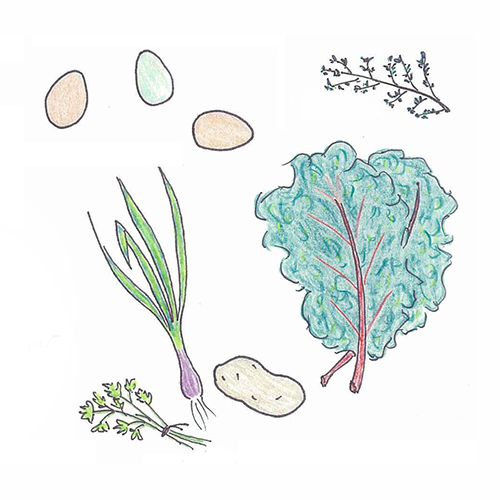
- Eggs
- Fresh vegetables and herbs
- Cheese
- Water
- Salt
- Pepper
- Olive oil
- Collect all the tools and ingredients, and then distribute them to the tables
- Gather supplies for the Chef Meeting
- Create the visual aid
- Copy the Frittata recipe to hand out
At the Chef Meeting
- Welcome students and introduce the Frittata recipe as an Italian food that can be eaten at breakfast, lunch, or dinner.
- Ask students to think back to Pan de los Muertos, where measuring and following the recipe precisely were important. Discuss the difference between the Pan de Los Muertos recipe and the Frittata recipe. The Frittata recipe offers flexibility, for example: 8-10 eggs, assorted vegetables, etc.
- Refer to the Autumn Harvest Soup recipe and remind students that different vegetables and different parts of the same vegetables cook at different rates. Divide vegetables into two categories, based on how long they take to cook.
- Demonstrate which tool and technique is best for each vegetable; emphasize that the vegetables should be cut into small pieces so they are distributed evenly throughout the dish.
- Ask students to wash their hands and join their table group.
At the Table
- Meet with the table groups to review the recipe and assign jobs:
- Review the knife cuts they learned so far (mince, dice, slice, chop).
- Encourage students to let their senses guide them through the recipe, paying close attention to changes in aroma, color, sound or texture.
- Prepare the recipe.
- Set the table; eat; clean up.
- Take the students outside while they are waiting for the frittata to finish cooking.
When they return, have them notice and describe the aromas in the kitchen. - Discuss with students what kinds of adjustments could be made to the Frittata.
At the Closing Circle
Ask students to share one thing they learned during their fall kitchen rotation.
Common Core, English Language Arts
&
Literacy, Grade 6
RI.6.7 Integrate information presented in different media or formats (e.g., visually, quantitatively) as well as in words to develop a coherent understanding of a topic or issue.
Edible Schoolyard In the Kitchen, Tools, Grade 6
6.1 Students recognize and name basic tools and equipment.
Edible Schoolyard In the Kitchen, Terms & Techniques, Grade 6
6.1 Students recognize proper cooking terms and techniques.
Edible Schoolyard In the Kitchen, Recipes & Ingredients, Grade 6
6.1 Students read and follow recipes, and understand that some recipes are flexible and some are specific.
All lessons at the Edible Schoolyard Berkeley are a collaboration between the teachers and staff of the Edible Schoolyard and Martin Luther King Jr. Middle School.
Students have a light snack. Students will work together to plant four beds of green cabbage. Students draw on their knowledge on how to amend soil with compost. They then transplant, water and cover beds with hoops and nettings.
Students work together to make roasted potatoes in the wood fire oven. While potatoes are cooking, students enjoy each other’s company and have time to play with the chickens.